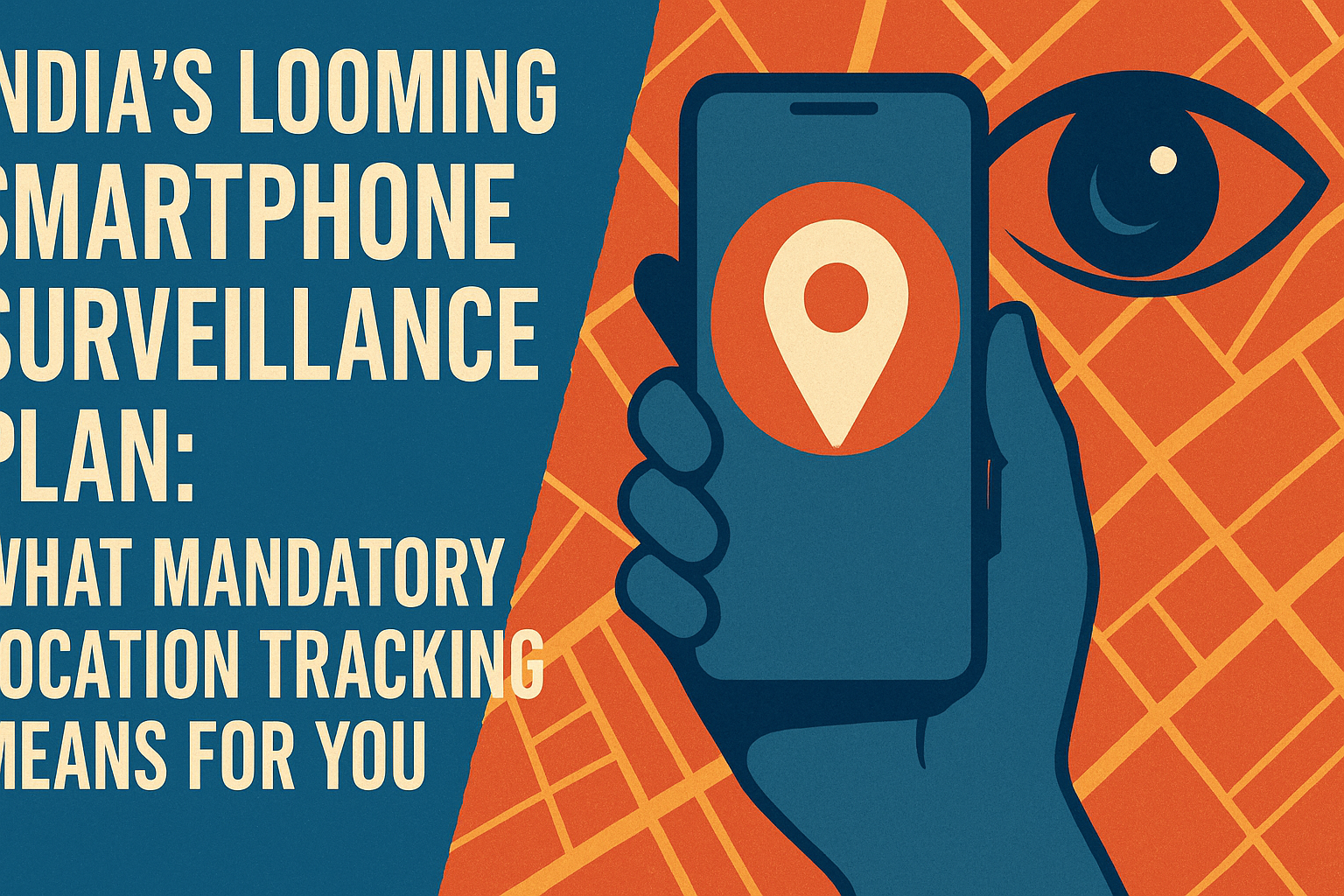
India’s Looming Smartphone Surveillance Plan. Imagine a scenario where the power to decide when and where your smartphone tracks your location is taken away, permanently. No more switching off GPS for privacy, no more saving battery life by disabling location services. This isn’t a scene from a dystopian novel; it’s a real and pressing concern for millions of smartphone users across India. Recent reports suggest that India is reportedly considering a ‘draconian’ plan that could fundamentally alter the privacy landscape for every device owner in the country.
According to research data from sources like Engadget, the nation’s telecom industry is pushing for a proposal that would mandate smartphone manufacturers to keep devices’ location services on at all times, with absolutely no option for users to turn them off. If this proposal moves from consideration to implementation, it would mark a significant shift in how personal data and digital autonomy are handled in India.
The Core of the Controversial Proposal
At its heart, the proposed plan is startlingly simple yet profoundly impactful: it seeks to enforce ‘always-on’ location tracking on all smartphones sold in India. This goes beyond existing mechanisms where apps request location permissions or where users can manually toggle the feature. Instead, the telecom industry’s desire, as reported, is to hardwire location services into devices, making them perpetually active and beyond user control. This implies that manufacturers would be compelled to integrate this functionality at a hardware or operating system level, effectively removing the user’s ability to manage their own location privacy.
While the exact motivations behind the telecom industry’s push are not explicitly detailed in the available data, such proposals often stem from concerns around national security, emergency services, or law enforcement tracking. However, the ‘no way to turn them off’ clause is what has truly raised alarm bells among privacy advocates and tech experts.
Understanding the ‘Draconian’ Implications for Users
The term ‘draconian,’ used in initial reports, perfectly encapsulates the severity of this potential policy. For an Indian smartphone user, the implications are far-reaching and deeply concerning:
-
Erosion of Personal Privacy
Your location data is highly personal. It reveals where you live, work, visit, and even your daily routines. Mandatory, unturnable-off tracking means a constant digital footprint, accessible to potentially various entities without your explicit consent or knowledge. This fundamentally undermines the right to privacy in the digital age.
-
Increased Surveillance Risks
With location services permanently enabled, the potential for government or other entities to monitor movements and patterns becomes significantly higher. While there might be legitimate reasons for tracking in specific, legally sanctioned cases, a blanket ‘always-on’ approach opens the door to potential misuse and mass surveillance.
-
Data Security Nightmares
If vast amounts of real-time location data are being collected and stored, the question of who holds this data and how securely it is protected becomes paramount. Any breach or hack of such a centralized system could expose sensitive personal information of millions, leading to identity theft, targeted harassment, or other severe consequences.
-
Impact on Device Performance and Battery Life
Continuously active location services are known battery drains. For many users, disabling GPS when not needed is a common practice to extend battery life. A mandatory ‘always-on’ system would likely lead to reduced phone autonomy, forcing users to carry power banks or frequently charge their devices, which is a practical inconvenience for daily life.
-
Lack of User Autonomy and Trust
At its core, this proposal strips users of control over their own devices. It fosters an environment of distrust between consumers, manufacturers, and regulatory bodies. In an increasingly digital world, user trust is crucial for the adoption and success of technology.
Challenges for Smartphone Manufacturers and India’s Tech Landscape
If this proposal were to become a reality, it would present immense technical and ethical challenges for smartphone manufacturers. Designing devices specifically for the Indian market with a hardcoded, unturnable-off location feature would be a complex undertaking, potentially requiring separate software builds and hardware configurations. This could lead to increased costs for manufacturers, which might eventually be passed on to consumers.
Moreover, global smartphone brands, many of whom adhere to international privacy standards and offer robust user controls, would face a dilemma. Implementing such a ‘draconian’ feature solely for India could damage their brand reputation globally and domestically. It might also make India a less attractive market for tech innovation, as companies may be hesitant to invest heavily in a region with such restrictive data policies.
From an international perspective, a move towards mandatory, unturnable-off location tracking could also raise eyebrows. Most democratic nations strive to balance security needs with individual digital rights, often granting users explicit control over their personal data, including location. India’s stance on this issue will undoubtedly influence its image as a global digital player.
The Road Ahead: A Call for Deliberation
As of now, this proposal remains under consideration, reportedly championed by the nation’s telecom industry. It is crucial for stakeholders, including privacy advocates, tech companies, and, most importantly, the citizens of India, to engage in a robust public discourse about the profound implications of such a plan. The balance between perceived security needs and fundamental individual privacy rights is a delicate one, demanding careful deliberation and transparent decision-making.
For Indian smartphone users, this news serves as a critical reminder of the ongoing debate surrounding digital privacy and the urgent need to understand and engage with policies that shape our technological future. The outcome of this consideration will undoubtedly have a lasting impact on how we interact with our devices and the digital world around us.